Green Relief Initiative
Green Relief Initiative
At Green Relief Initiative, we believe that food security is the foundation of dignity, resilience, and sustainable development. In the Rhino Camp Refugee Settlement, thousands of refugee families rely on small-scale farming to support their livelihoods. However, limited resources, unpredictable weather patterns, and poor access to improved seeds have often made farming difficult.
To address these challenges, Green Relief Initiative is distributing a high-yielding variety of sorghum to refugee farmers, helping communities grow more food, improve nutrition, and strengthen self-reliance.
Sorghum is one of the most reliable crops for dry and semi-arid regions like West Nile. It is highly valued because it:
For many refugee families, sorghum is not just a crop — it is a lifeline for food security.
Through our agricultural support programs, Green Relief Initiative is providing improved sorghum varieties that produce higher yields compared to traditional varieties.
These improved seeds offer several advantages:
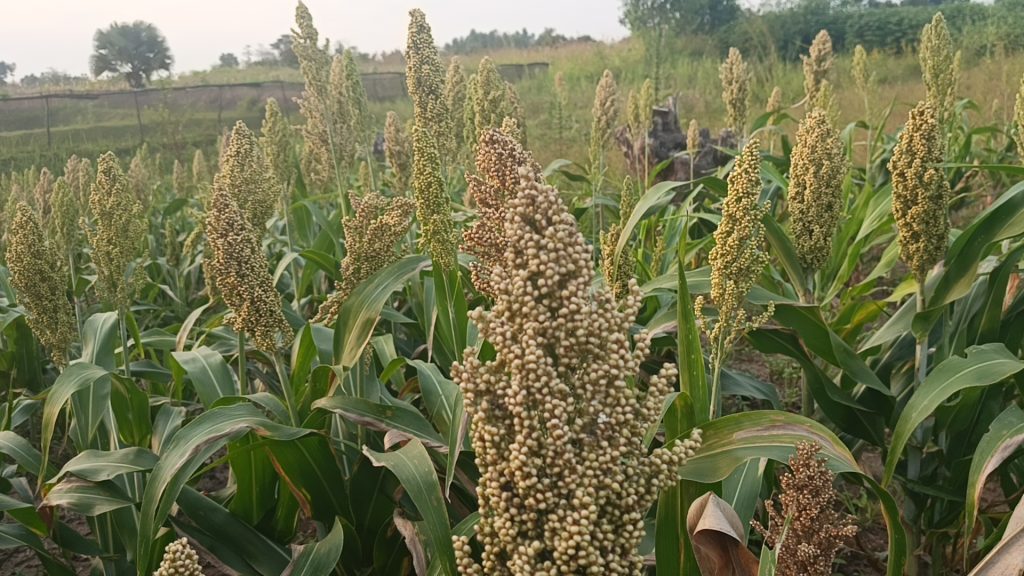
The sorghum fields currently growing in the settlement demonstrate the potential of these varieties. As the crops mature, farmers are already witnessing healthy heads filled with grains, promising a productive harvest.
In addition to seed distribution, Green Relief Initiative works closely with refugee farmers by providing:
These initiatives help farmers maximize yields and build long-term agricultural knowledge.
By introducing high-yield sorghum varieties, Green Relief Initiative is helping refugee families move closer to food self-sufficiency. Increased production means:
Agriculture has the power to restore hope and stability for displaced communities. With the right seeds, knowledge, and support, refugee farmers can transform small plots of land into productive farms.
Green Relief Initiative remains committed to expanding access to improved seeds, climate-smart farming practices, and livelihood opportunities for refugees and host communities alike.
Together, we are planting the seeds of resilience, dignity, and sustainable food security in Rhino Camp Refugee Settlement